
For MCS solar PV and battery installers
Battery installation paperwork, without a second filing system
A PV and battery job is two sets of paperwork on one visit. Voltfile adds the battery items to the same job file, with their own certificate clock and hazards in the construction phase plan.
The problem
Where battery jobs catch people out
Retrofit batteries on an existing PV system, battery location and fire separation questions, and the DNO route changing because the battery’s inverter pushes the total over the G98 limit.
On a combined job there are two certificates with two clocks, and it is easy to raise one and forget the other.
How Voltfile helps
What you get on every job
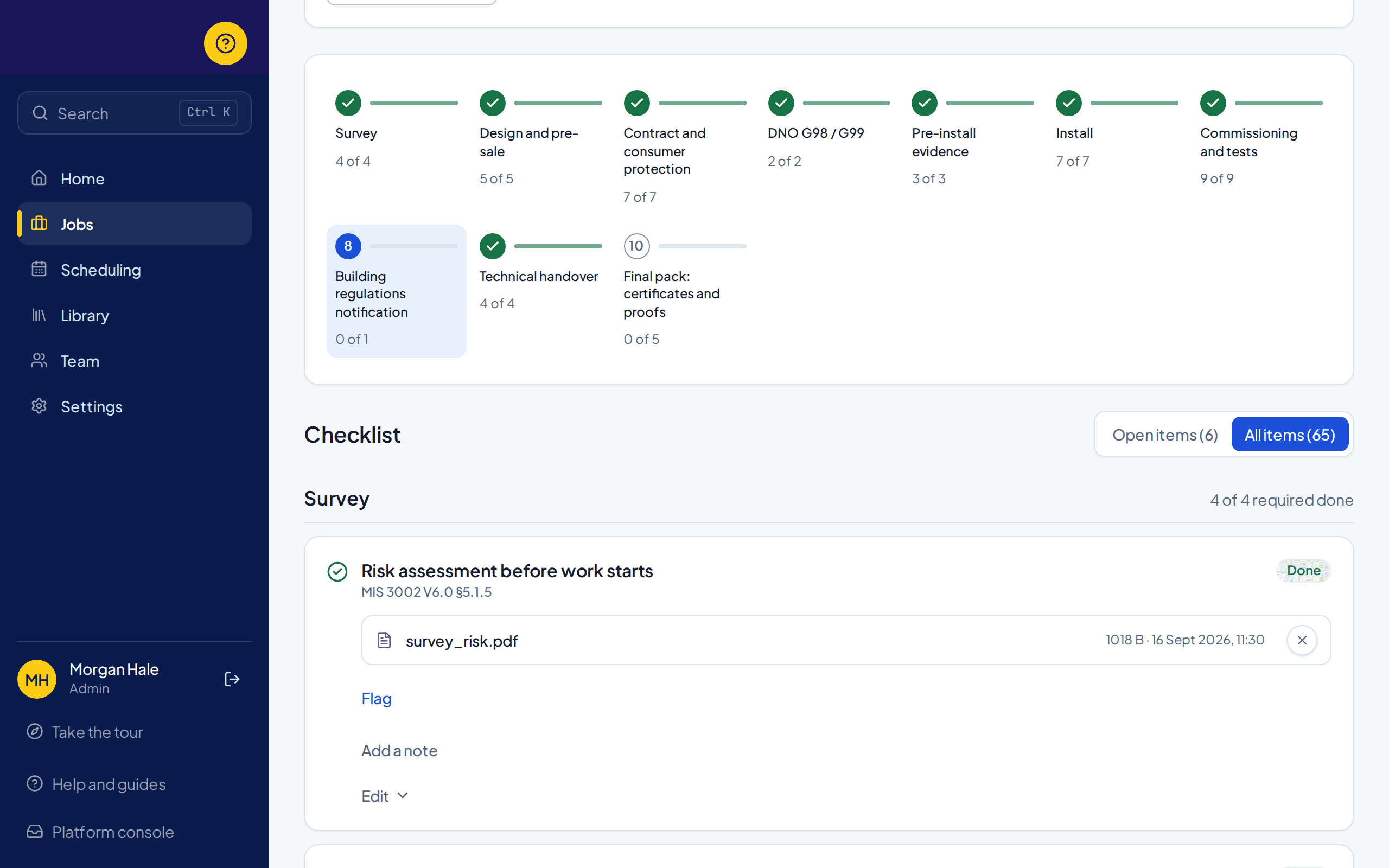
- Battery items on the same jobPre-sale information, location and ventilation, installation and commissioning evidence, and handover items for the battery sit on the same checklist as the PV.
- Two certificates, two clocksEach certificate has its own deadline from commissioning, following the job’s scheme track.
- The DNO route checkedThe G98 limit is checked against the combined PV, battery inverter and existing generation. An answer that does not add up is refused.
- Battery hazards in the planHeavy lifts, arc flash, thermal runaway and where the battery is stored before install are added to the construction phase plan on battery jobs.
- Warranties from the manufacturerEach battery's warranty comes from the manufacturer's own terms in the equipment library, with where it came from. If one is missing, Price and send says so, with one link to fill it in.
What it does not do
- It does not choose the battery location or assess fire risk. It records what your designer decided and the evidence for it.
- It records your MCS battery scope; it does not check it with your certification body.
FAQ
Common questions
Does it handle battery-only retrofits?
Yes. Items that only apply to new PV are set aside when the job is battery-only, and the existing generation is counted in the DNO check.
Which battery standard does it follow?
Clause labels follow the job’s track: the previous-scheme battery standard or the MCS:2025 documents. Labels are data you can update; always check the current issue on the official source.
Guides on this topic
Related
Free: the handover evidence checklist
A printable one-page-per-job PDF, from survey to final pack.